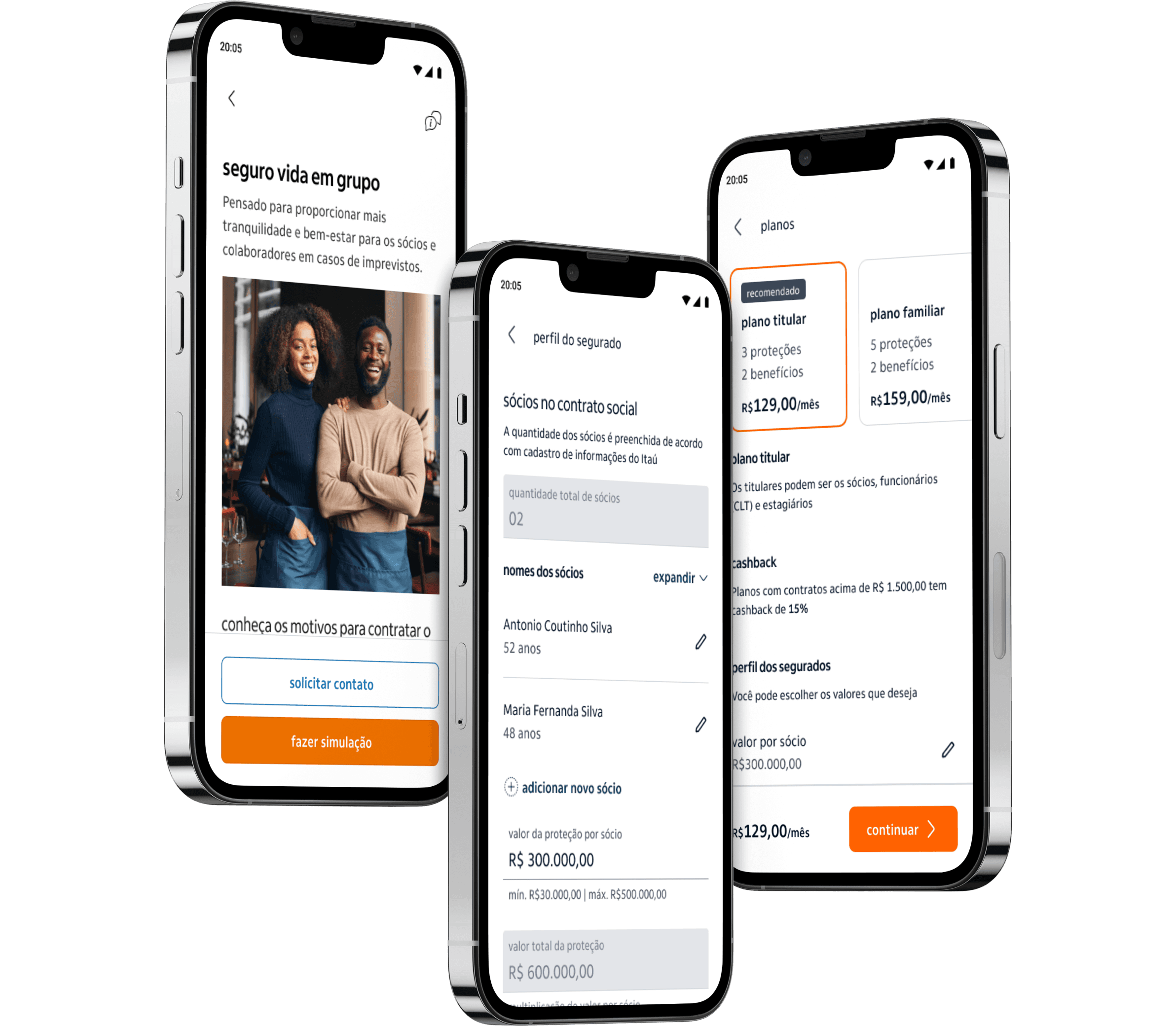
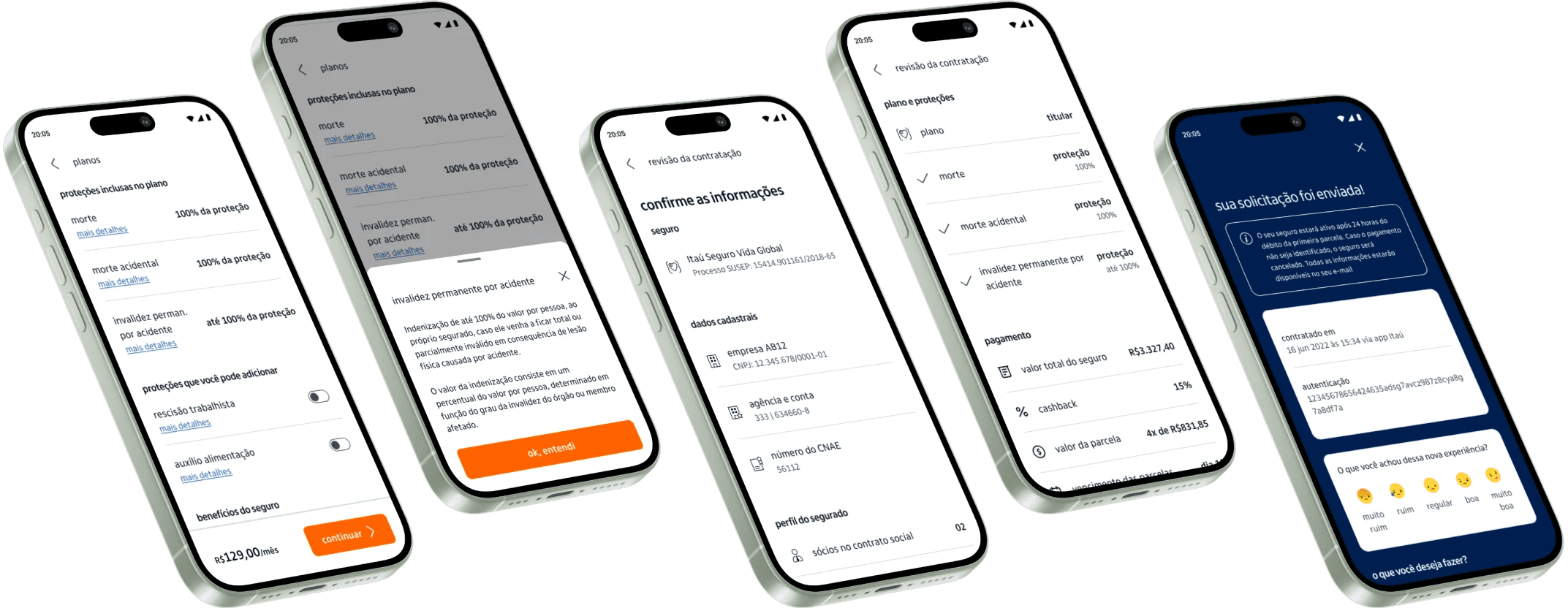
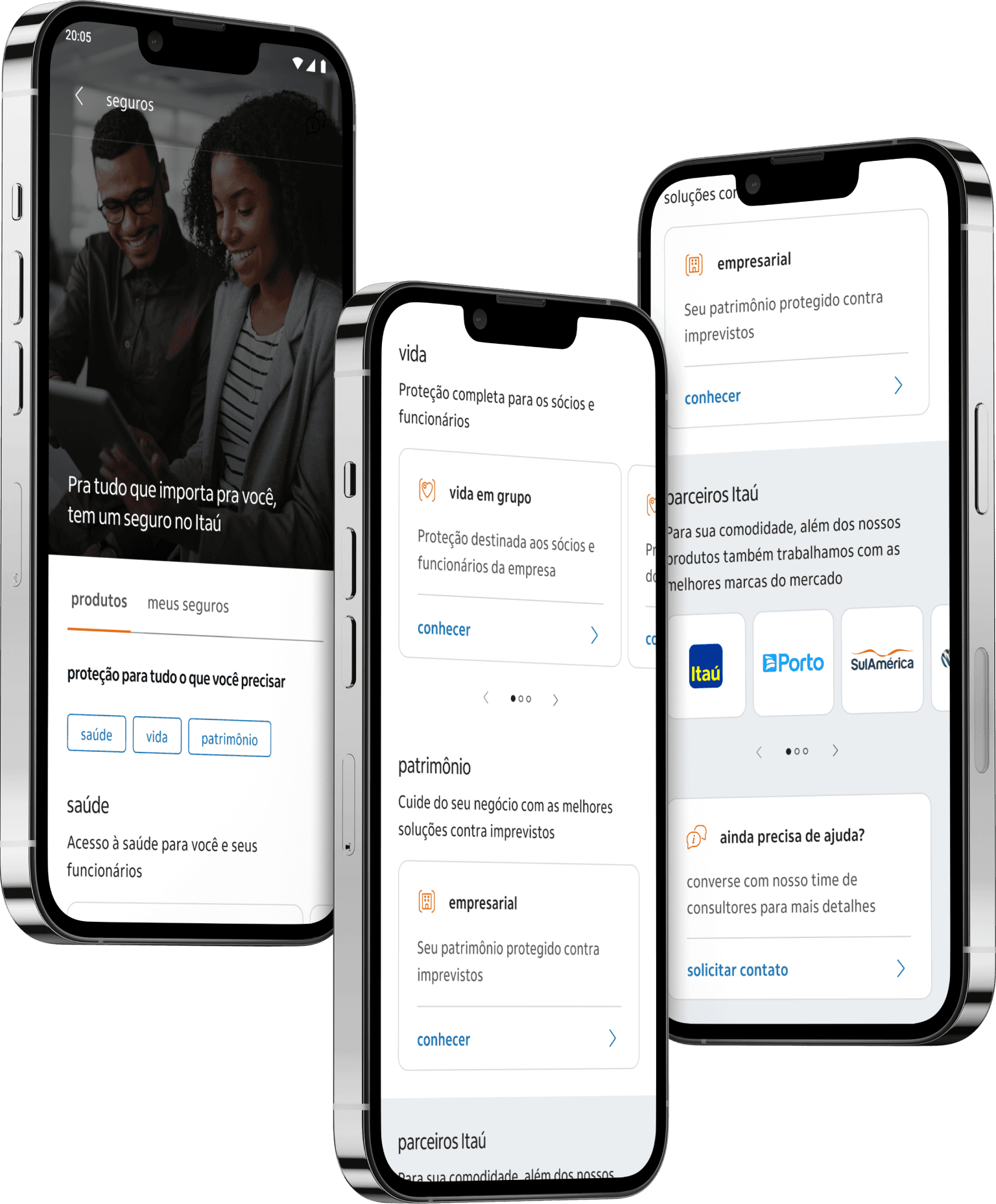
Complete solution for companies that want to take care of their employees and protect their businesses. The insurance provides financial security in cases of death or disability, support for families, and assistance in maintaining the company's economic balance, strengthening risk management and sustainable growth.
Company: Itaú
Segment: Itaú Companies Insurance
Environment: Logged in area
Reach: ≈ 1.7 million customers
Platform: Mobile and Desktop
Year: 2022 - 2023
Research: Quantitative, qualitative, and in-depth interviews
Visual: Creation and design of the journey using Design System
Navigable prototyping: Mobile and Desktop
Testing: Usability / SUM
Technical Specification: Accessibility
Results analysis: Metrics
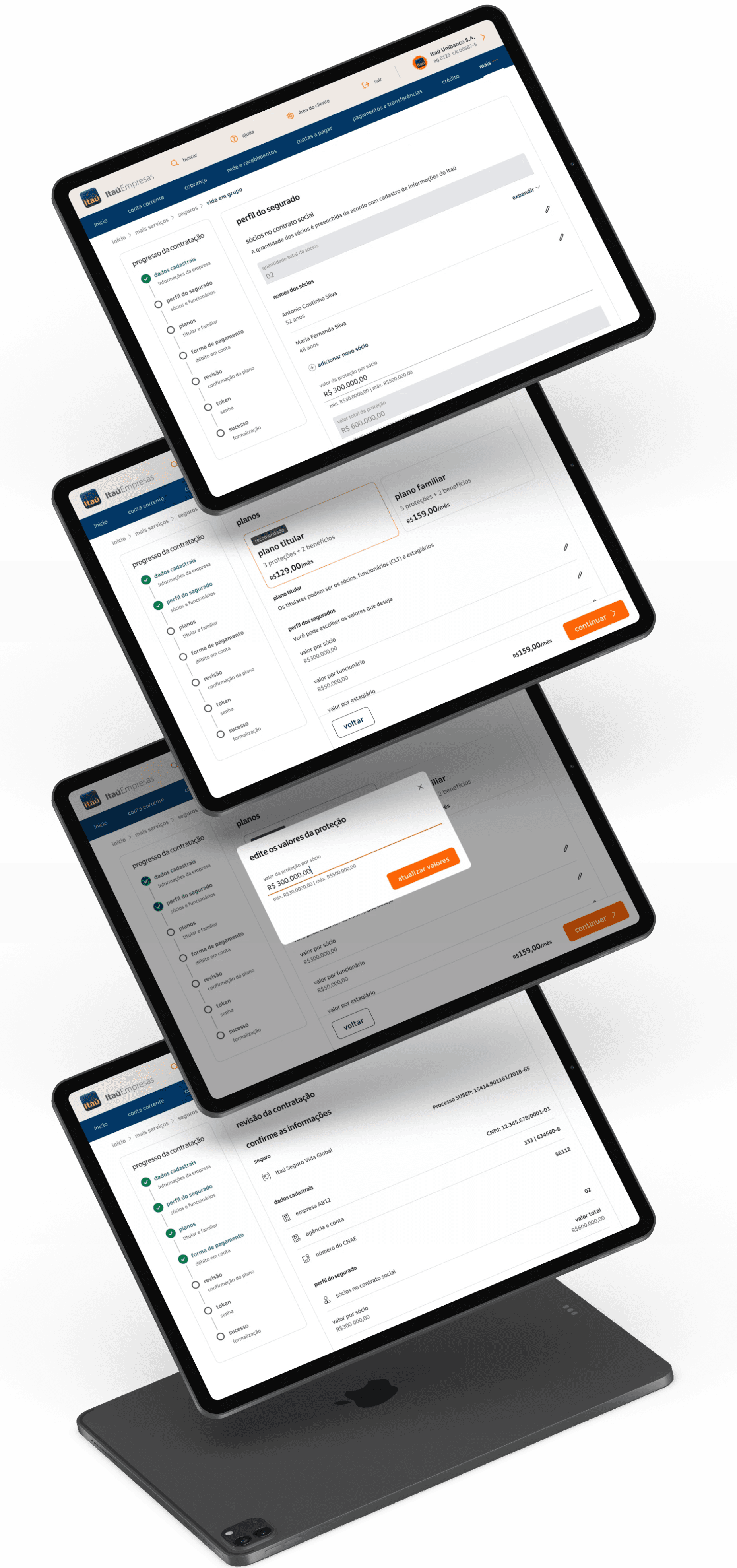
Enable the simulation and contracting of insurance through digital channels for current account clients in the corporate segment.
The project went through stages of research, interviews, analysis, Design Critique, and technical reviews with the Writing and Accessibility team, thus ensuring a consistent and accessible construction.
Six individual tests were conducted with Itaú Empresas account holders, encompassing different ages, genders, and business segments. The main objective was to understand the perception of the new design and navigation in the contracting journey.
In the results of the SUM Test, we can analyze some data:
Satisfactory usability: 92.22%
Standard navigation time: 763 seconds
Average navigation time: 520 seconds
Satisfaction index: 76.67%
The satisfaction index was considered based on ease of use, satisfaction while using, and the time spent. One of the reasons for not giving maximum scores in satisfaction evaluations was the amount of text in the journey and the insecurity in contracting the insurance without the guidance of a specialist or an account manager.
"I found it easy, but I don't know if I would make the hiring decision on the computer, because the broker already brings everything very well explained and besides that, any questions he answers right away."
In general, the main information and details, such as values, protections, and insurance review, were easy to locate.
"I understood and found it very easy. Since I have a few employees, I could even hire this way. What I liked the most was not having to interact with anyone."
The tests were essential to identify friction points and opportunities for improvement in the journeys.
After the launch, there was no significant number of digital hires, and some questions arose.
Hypotheses raised:
Customers were not aware of the product
High prices in the plan simulations
Long journey, resulting in abandonment
Slow loading of information
After some analyses, we made changes to optimize the flow. We intensified promotional campaigns on digital channels to offer Group Life Insurance, removed some initial steps from the simulation process, and reduced the amount of information.
In fact, the main factor that significantly impacted customers' decisions was the exacerbated slowness in loading data to perform a simulation. Since it is a product with many price variables, the technology team faced the challenge of minimizing this over time.
In this scenario, the product achieved an average of R$ 940 thousand in revenue over the period of one year. The team continued to seek improvements and promote the hiring of the product on digital channels.
Aligning expectations with stakeholders, avoiding rework, is essential to expedite the development process. It is natural for changes to occur along the way; however, having a more concrete concept facilitates the execution of the project in a faster and more efficient manner.
It was a long-term project, with many business and technology rules behind it, and various adjustments were made throughout development. Additionally, some elements included in the desktop journey were deprioritized in the initial delivery.
But the main lesson is that the Design and Technology teams must be very well aligned so that the journey is as consistent as possible with what was planned. Often, we become dependent on technology and that should not happen. Design and technology should walk side by side, joining efforts to provide the best experience for customers.